Fuzeon is marketed by Trimeris and Hoffmann-La Roche. They have a useful web site that includes a step by step guide on how to administer this drug: click here.
Our quick-reference chart allows you to compare all the currently available anti-HIV drugs, including dosing, side effects, & dietary restrictions.
Treatment News
Search for recent news and archived stories about
Fuzeon.
Have more questions? Then post a question or comment in our Community Forums.
Check My Meds allows you to take the preventive step of determining whether the drugs you are taking interact with each other, or interact with a certain food, and cause a bad reaction in your body.
Our Lessons: Check out our informative Lessons covering various topics to help you make treatment decisions.
For a list of great books about living with HIV and making informed treatment decisions, along with easy links to buy them from Amazon.com, click here.
For a list of magazines, including POZ, the nation's leading magazine covering HIV and AIDS, click here.
What is the most important information I should know about Fuzeon?
Fuzeon is a fusion inhibitor being manufactured by Trimeris and Hoffmann-La Roche. It was approved by the U.S. Food and Drug Administration (FDA) in March, 2003. Fuzeon is approved for HIV-positive people who have tried other HIV drugs in the past and are unable to keep their viral loads undetectable using drugs that are currently available. It has not yet been approved for HIV-positive people who are starting HIV drug treatment for the first time.
Fuzeon must be used in combination with other HIV drugs.
Roche has established a patient assistance program (PAP) for people living with HIV who do not have private or public health insurance and are unable to afford Fuzeon. To learn more about the PAP for Fuzeon, call 877-757-6243.
What is Fuzeon?
Fuzeon is an HIV medication. It is in a category of HIV medicines called fusion inhibitors, or more broadly, entry inhibitors.
Fuzeon binds to a protein on HIV's surface called gp41. Once it does this, HIV cannot successfully bind with the surface of CD4 cells, thus preventing the virus from infecting healthy cells.
Fuzeon will most likely need to be used in combination with other HIV drugs.
What is already known about Fuzeon?
Because of its fragile structure (it is a peptide), Fuzeon cannot be taken by mouth. It is currently given in an injectable form and requires two shots a day: one in the morning and one 12 hours later at night. Each shot contains 90mg of Fuzeon. Small hypodermic needles, similar to those used by diabetics to inject insulin, are used.
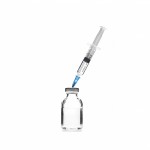
Injecting Fuzeon is actually a multi-step process. A month's supply of Fuzeon comes in boxes containing 120 little vials. 60 vials contain Fuzeon powder and 60 vials contain sterile water (one Fuzeon vial and one sterile water vial, twice a day). Before Fuzeon can be injected, you will need to use the hypodermic needle to remove sterile water from one vial and inject it into a vial containing Fuzeon powder. Once you have mixed a single dose—a process called "reconstitution"—the liquid is injected directly under the skin using the hypodermic needle. The mixing and injecting of Fuzeon can be a difficult and time-consuming process and must be done correctly to ensure that the drug is effective. Be sure that your doctor or nurse carefully explains how Fuzeon needs to be mixed and injected correctly.
For HIV-positive people considering, starting, or currently using Fuzeon, Roche offers two helpful and free support programs.
The Fuzeon Connections program offers an assistance hotline, staffed by nurses five days a week, to help answer questions, including how to prepare and inject Fuzeon. The hotline can be reached by calling: 1-877-4FUZEON (438-9366).
Roche also offers the Nurse-to-Patient Connections program, also available by calling 1-877-4FUZEON, providing personalized direct assistance. HIV-positive people can request a home visit by a nurse educator, to learn more about preparing and injecting Fuzeon, proper use of the syringes that come with Fuzeon, and to help manage injection anxiety.
Fuzeon might interact with other medications, including those used to treat HIV. It is important that your personal physician and/or the research nurse or study investigator be aware of all drugs you are taking, including those you buy without a prescription.
Fuzeon holds promise for HIV-positive patients who have taken (and failed) numerous HIV drugs in the past. Because Fuzeon targets HIV differently than currently available drugs, chances are that most people living with the virus—regardless of the medications they have taken in the past—will likely benefit from using Fuzeon. Two large clinical trials have determined that Fuzeon, when combined with other drugs, is effective for patients who have failed other HIV drugs in the past. However, Fuzeon worked best when it was combined with at least two other drugs that the virus was sensitive to (patients who used Fuzeon in combination with drugs that their virus was highly resistant to did not experience decreases in their viral load for very long). In this way, it is best to use drug-resistance testing to determine which drugs your virus is sensitive to and to use the results of testing to figure out which are the best HIV drugs to combine with Fuzeon.
It is also expected that Fuzeon, when combined with other HIV drugs, will have strong activity against HIV in people who have never taken HIV medications in the past. According to early results from one study, Fuzeon taken alone reduced viral load from anywhere between 30% to more than 90% in patients who had not taken any other HIV drugs in the past. Fuzeon is not yet approved by the FDA for HIV-positive people who are new to HIV treatment. HIV can become resistant to Fuzeon, particularly if it (combined with other HIV drugs) is not able to reduce viral load to undetectable levels or keep viral load undetectable. Drug-resistance tests are able to determine if your virus has become less sensitive to Fuzeon, in the event that your viral load becomes detectable or increases while you are taking this drug.
What is known about side effects?
Injection site reactions -- symptoms that occur at the spot where you inject Fuzeon -- have been the most common side effect reported in studies. Reactions may include pain and discomfort, hardened skin, redness, bumps, itching and swelling. Most reactions are mild, but occasionally may be severe. While 98% of patients that take Fuzeon report injection site reactions, only 4% have stopped taking the drug because of this skin irritation.
A reaction at one skin injection site usually lasts for less than 7 days. Injection site reactions may be worse when injections are given again in the same place on the body, or when the injection is given deeper than it should be (for example, into the muscle).
In clinical trials, patients taking Fuzeon with other HIV medicines got bacterial pneumonia more often than patients not receiving Fuzeon. It is unclear if this was related to the use of Fuzeon. You should contact your healthcare provider right away if you have a cough, fever or trouble breathing.
Although very rare, allergic reactions have been seen with Fuzeon and can occur again the drug is restarted. Symptoms can include rash, fever, nausea and vomiting, chills, shaking, low blood pressure and increased liver enzymes.
Other side effects may occur as a result of taking Fuzeon, including peripheral neuropathy, insomnia, depression, decreased appetite, fatigue, muscle pain, constipation, and pancreas problems.
Can pregnant women take Fuzeon?
Fuzeon is classified by the FDA as a pregnancy category B drug. Pregnancy category B means that animal studies have failed to demonstrate a risk to the fetus, but there are no adequate and well-controlled studies in pregnant women. HIV-positive women who become pregnant should discuss the benefits and possible side effects of HIV treatment to help protect their babies from HIV (see our lesson called Family Planning, Pregnancy & HIV).
It is not known whether Fuzeon passes into breast milk and what effect it may have on a nursing baby. To prevent transmission of the virus to uninfected babies, it is recommended that HIV-positive mothers not breast-feed.
Where can I learn more about clinical trials of Fuzeon?
If you would like to find out if you are eligible for any clinical trials that include Fuzeon, there is an interactive web site run by ACRIA, the AIDS Community Research Initiative of America.
Another useful service for finding clinical trials is AIDSinfo.nih.gov, a site run by the U.S. National Institutes of Health. They have "health information specialists" you can talk to at their toll-free number at 1-800-HIV-0440 (1-800-448-0440).
Last Revised: May 15, 2009
This content is written by the editorial team at AIDSmeds.com.
Please find profiles of this team on our "About Us" page.